
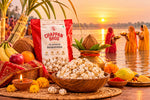
Chhath Puja Special Makhana: Why Roasted Makhana Is a Perfect Choice for Festive Celebrations
, by Akash Jain, 23 min reading time
, by Akash Jain, 23 min reading time
Explore premium roasted makhana, delicious festive recipes, and easy snacking ideas to make your family celebrations more special and memorable.
Chhath Puja is one of the most meaningful festivals celebrated across Bihar, Jharkhand, eastern Uttar Pradesh, and several other parts of India. Dedicated to the worship of Lord Surya (the Sun God) and Chhathi Maiya, this festival represents gratitude, devotion, purity, discipline, and respect for nature. From preparing traditional offerings to observing rituals at rivers and other water bodies, every aspect of Chhath Puja carries deep cultural significance.
Food plays an important role in these celebrations. Families carefully select fresh fruits, seasonal ingredients, traditional sweets, and other offerings while maintaining cleanliness and following their family traditions. Among the ingredients that have become popular for festive consumption is Chhath Puja special makhana, particularly when prepared as Roasted Makhana.
Makhana, also known as fox nuts or lotus seeds in everyday conversation, is appreciated for its light, crunchy texture and versatility. It can be enjoyed as a simple roasted snack, as part of selected festive preparations, or served to family members during gatherings. Its mild flavour also makes it easy to combine with traditional Indian ingredients.
If you are looking for the Best Makhana for Chhath Puja Prasad, understanding quality, freshness, roasting methods, and suitability for your family's customs can help you make a better choice.
In this guide, we will explore why roasted makhana is a convenient festive snack, how to choose quality fox nuts, ways to prepare them at home, and what to consider when including makhana in Chhath Puja celebrations.
Chhath Puja is not simply a festival involving food and rituals. It is a celebration of devotion, nature, family traditions, and gratitude towards the Sun God.
During the festival, devotees prepare traditional offerings known as prasad or arghya offerings. These may include thekua, seasonal fruits, sugarcane, coconuts, rice-based preparations, and other items according to regional and family customs.
Makhana is another ingredient that many households appreciate for its simplicity and versatility. It can be used in different festive recipes or enjoyed as a snack during family gatherings.
However, one important distinction should be understood: roasted makhana is not a compulsory or universally prescribed Chhath Puja offering. Whether it is included in the offering basket depends on local customs, family traditions, and the guidance followed by devotees.
For everyday festive enjoyment, however, roasted fox nuts offer a convenient option that can be prepared with relatively few ingredients.
Festivals often involve long preparation hours, family gatherings, and the preparation of several dishes. During these occasions, people appreciate snacks that are easy to prepare, serve, and store.
This is where Roasted Makhana becomes useful.
Unlike deep-fried snacks, makhana can be roasted in a pan with a small quantity of ghee or oil. Its naturally mild flavour allows it to work with both simple and mildly seasoned preparations.
Here are some reasons why families enjoy including roasted makhana in their festive snack arrangements.
One of the main attractions of makhana is its airy, crisp texture. Properly roasted fox nuts develop a pleasant crunch without requiring deep frying.
This makes them suitable for people who want an alternative to heavily fried festive snacks.
For example, when relatives gather at home during Chhath Puja preparations, a bowl of lightly roasted makhana can be served alongside tea or other refreshments.
Roasted makhana does not require complicated cooking techniques.
You generally need:
The preparation process is straightforward, making it convenient even when several other festive dishes are being prepared.
Another advantage of makhana is that it can be prepared in different flavours.
Popular variations include:
For households that prefer simple festive food, plain or lightly seasoned preparations are often practical choices.
Roasted makhana can be prepared in advance and served in small bowls during family gatherings.
Its dry texture also makes it easier to carry in an airtight container when travelling to relatives' homes.
For the best texture, allow freshly roasted makhana to cool completely before storing it.
Not all makhana available in the market have the same quality. Size, freshness, texture, moisture, and storage conditions can influence the final eating experience.
Makhana is obtained from the seeds of the aquatic plant Euryale ferox. It is cultivated in parts of India, particularly Bihar, which is widely associated with makhana production.
The seeds undergo processing before becoming the familiar white, puffed fox nuts available in retail markets.
When purchasing Makhana for Chhath Puja, consider the following characteristics.
Good-quality popped makhana generally has a clean appearance and a reasonably consistent size.
Larger pieces may be preferred for certain premium snack presentations, but size alone does not establish quality.
Check for:
Fresh, properly stored makhana should feel dry and light.
If the product feels unusually soft, damp, or chewy, it may have absorbed moisture during storage.
Freshness matters because moisture can affect both crunchiness and shelf life.
Good-quality makhana generally has a mild, neutral aroma.
Avoid products with a musty smell, unusual odour, or signs of contamination.
When possible, taste a small sample. It should have a clean flavour without an unpleasant stale aftertaste.
Packaging is another important quality consideration.
Choose products packed in clean, food-grade packaging with:
A properly sealed package helps protect makhana from humidity and external contamination.
Many people look for alternatives to fried snacks during festivals. Roasted makhana is popular because it can be prepared using a relatively small amount of added fat.
However, it is important to understand its nutritional value without making exaggerated health claims.
Makhana contains carbohydrates, some protein, dietary fibre, and minerals. Its nutritional composition can vary depending on processing, serving size, and preparation method.
Deep-fried snacks often contain additional oil because of their preparation method.
Makhana can be roasted with a small amount of ghee or oil, making it possible to control the amount of added fat.
This does not automatically make every flavoured makhana product healthier. Ingredients, portion size, and preparation methods all matter.
Plain makhana is naturally gluten-free.
People following a gluten-free diet may find it useful as a snack option. However, those with coeliac disease or serious gluten sensitivity should check packaging and manufacturing practices for possible cross-contact.
Makhana provides nutrients that contribute to an overall balanced diet.
Its composition includes:
It should be considered one part of a varied diet rather than a complete source of nutrition.
Even a simple roasted snack should be consumed in reasonable quantities.
Adding excessive ghee, butter, salt, sugar, or flavouring powders can significantly change the nutritional profile.
A practical approach is to prepare a small bowl rather than eating directly from a large packet.
When searching for the Best Makhana for Chhath Puja Prasad, buyers should look beyond attractive packaging and promotional descriptions.
The most suitable product depends on how you intend to use it.
If you plan to use makhana in kheer or other traditional recipes, choose clean, fresh pieces with a pleasant natural aroma.
Uniformity is helpful because it allows the pieces to cook more consistently.
For roasting, look for dry, well-popped fox nuts with minimal broken pieces.
These are generally easier to roast evenly and season.
If you are purchasing makhana for relatives or festive gifting, consider:
A well-presented food gift should also provide transparent product information.
Plain makhana is a practical choice for people who prefer to control their ingredients.
You can roast it at home and add only the seasoning that suits your taste and dietary preferences.
One of the easiest ways to enjoy makhana during Chhath Puja is to roast it at home.
The secret is to use low to medium heat and allow sufficient time for moisture to escape.
If you are preparing food for a religious offering, follow your family's ingredient and preparation requirements rather than assuming every seasoning is appropriate.
Step 1: Check the makhana
Spread the makhana on a clean plate and remove any broken pieces, foreign particles, or unwanted material.
Step 2: Heat the pan
Place a heavy-bottomed kadai over low to medium heat.
Add a small quantity of ghee and allow it to melt.
Step 3: Add the makhana
Add the makhana and stir continuously so that the pieces roast evenly.
Avoid using very high heat because the outer surface may brown before the inside becomes crisp.
Step 4: Roast patiently
Continue roasting for approximately 6–10 minutes, depending on the size of the makhana, pan, and heat level.
The pieces should feel lighter and develop a crisp texture.
Step 5: Test the texture
Take one piece, allow it to cool briefly, and press it gently between your fingers.
Properly roasted makhana should break with a crisp texture rather than bend or feel chewy.
Step 6: Add seasoning
If desired, add a small amount of black pepper, salt, or other suitable seasoning.
Mix gently so the flavour is distributed evenly.
Step 7: Cool before storing
Spread the roasted makhana on a clean plate and allow it to cool completely.
Store it in an airtight container once it reaches room temperature.
Do not judge the final crunch while the makhana is still very hot. It may become noticeably crispier as it cools.
This simple step helps prevent unnecessary over-roasting.
Chhath Puja food traditions vary across households and regions. Some families follow long-established offering practices, while others prepare additional dishes for guests and family members.
Makhana offers flexibility because it can be used in several ways.
Makhana kheer is a popular Indian dessert preparation made using fox nuts, milk, and suitable sweetening ingredients.
A simple method involves:
For a festive preparation, use fresh ingredients and clean utensils.
Whether it is appropriate for a particular Chhath offering depends on the family's religious practices.
Plain roasted makhana is suitable as an everyday festive snack.
It can be prepared without elaborate seasoning and served separately from the traditional prasad.
Some households enjoy combining roasted makhana with almonds, cashews, or raisins.
This creates a more varied snack mix that can be served during family gatherings.
Keep in mind that nuts are common allergens, so inform guests about the ingredients.
Makhana can also be included in selected sweet preparations.
Its mild taste makes it compatible with ingredients such as milk, cardamom, saffron, and dry fruits.
Always check the ingredients and preparation requirements before including such dishes in religious offerings.
The traditional food associated with Chhath Puja reflects regional customs and devotional practices.
Some widely recognised preparations include:
Thekua: A traditional sweet preparation made using wheat flour, jaggery or sugar, and ghee. It is one of the best-known foods associated with Chhath Puja.
Seasonal fruits: Bananas, coconuts, apples, and other fruits may be included in offering baskets depending on availability and local traditions.
Sugarcane: Sugarcane is commonly associated with Chhath offerings and festive arrangements.
Rice-based preparations: Rice and related dishes may be prepared according to family customs.
Coconut: Coconut is a familiar ingredient in many traditional offerings.
Makhana: Fox nuts can be used in selected festive recipes or enjoyed as an additional snack, subject to family practices.
It is important to respect the traditional significance of each offering. Roasted makhana should not be presented as a replacement for established Chhath Puja prasad.
Selecting the right makhana becomes easier when you understand what to look for in a quality product.
Chappan Bhog Makhana can be considered when exploring makhana options for festive snacking and everyday consumption.
Before selecting any product, customers should check its actual packaging and product information, including:
For festive occasions, many households prefer products that are easy to prepare, convenient to serve, and suitable for different family preferences.
Plain makhana also provides flexibility because it can be roasted at home or used in selected recipes.
The key is to choose according to the intended use rather than relying only on marketing descriptions.
A good makhana experience depends on more than the roasting process. Buying, handling, and storing the product correctly are equally important.
Here are some practical tips.
For kheer, select makhana suitable for cooking.
For roasting, choose dry, well-popped pieces.
For gifting, prioritise packaging, freshness, and product information.
Makhana absorbs moisture from the surrounding environment.
Always store it in an airtight container and avoid leaving the packet open for extended periods.
If you are preparing makhana for several guests, roast it in manageable batches.
This helps maintain even heat distribution and prevents overcrowding in the pan.
Heavy seasoning can overpower the natural flavour.
A little ghee and a suitable seasoning are often enough for a simple preparation.
Before serving, check for unusual odours, moisture, or changes in texture.
Discard any product that shows signs of spoilage or contamination.
Even a simple snack can lose its quality if it is not prepared or stored properly.
Chhath Puja preparations can involve several days of planning, shopping, cleaning, cooking, and organising offerings.
During this time, simple snack options can make household arrangements easier.
Roasted makhana offers three practical advantages.
First, it can be prepared quickly using basic kitchen ingredients.
Second, it can be customized according to individual taste preferences.
Third, it can be served separately from traditional religious offerings, allowing families to maintain their established rituals while enjoying additional refreshments.
For example, a family preparing for the evening arghya may keep a separate bowl of plain roasted makhana for guests. Another household may prepare makhana kheer for a family meal, provided the recipe is appropriate for its customs.
These small choices make makhana a versatile ingredient during festive celebrations.
Chhath Puja is a festival rooted in devotion, gratitude, discipline, and family traditions. Its food preparations carry cultural importance, and every household has its own way of following the rituals.
Chhath Puja special makhana offers a convenient way to enjoy fox nuts during the festive season. Whether you prefer plain roasted makhana, lightly seasoned snacks, or traditional makhana kheer, the ingredient provides versatility and an enjoyable texture.
When choosing the Best Makhana for Chhath Puja Prasad, pay attention to freshness, cleanliness, packaging, and the suitability of ingredients for your intended preparation. Remember that roasted makhana is an additional festive snack rather than a compulsory replacement for traditional offerings.
With quality ingredients and careful preparation, Roasted Makhana can become a simple and enjoyable part of your family's festive food arrangements.
This Chhath Puja, explore the versatility of fox nuts with Chappan Bhog Makhana and make thoughtful choices for your festive snacking and family gatherings.
Roasted makhana can be enjoyed as an additional festive snack during Chhath Puja. However, whether it is suitable for inclusion in the religious offering depends on regional traditions and family customs. Devotees should follow their established rituals and preparation guidelines.
The most suitable makhana depends on the intended preparation. For roasting, choose fresh, dry, clean, and well-popped pieces. For makhana kheer, select pieces that are suitable for cooking and have a clean, natural aroma. If using makhana as prasad, check whether the preparation and ingredients comply with your family's customs.
Heat a heavy-bottomed pan, add a small quantity of ghee, and roast two cups of makhana over low to medium heat. Stir continuously for approximately 6–10 minutes, adjusting the time according to the size and moisture of the pieces. Allow one piece to cool before testing its crunch. Let the entire batch cool before storing it in an airtight container.
Yes, makhana can be used in selected festive preparations, such as makhana kheer, depending on household traditions. It can also be served as a separate snack. However, it is not a universally prescribed Chhath Puja offering, and it should not replace traditional prasad such as thekua or other customary offerings.
Allow roasted makhana to cool completely before transferring it to a clean, dry, airtight container. Store the container in a cool, dry place away from moisture and direct sunlight. Avoid using wet spoons or hands when taking out the snack. Always follow the product's best-before date and discard it if its smell, appearance, or texture changes unexpectedly.