
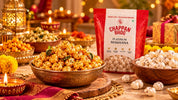
Why Roasted Makhana Is a Convenient Snack for Diwali Celebrations?
, by Akash Jain, 20 min reading time
, by Akash Jain, 20 min reading time
Explore easy recipes, preparation tips, and serving ideas with Chappan Bhog Makhana for a more convenient festive snack spread.
Diwali brings families and friends together for lights, decorations, gifts, sweets, and delicious food. But preparing snacks for guests can quickly become time-consuming, especially when you want to offer something crunchy and flavourful alongside traditional mithai, namkeen, and fried treats.
That is where makhana snacks for Diwali can make festive preparation easier. Makhana, commonly known as fox nuts, has a light texture and a mild taste that works well with both savoury and sweet seasonings. It can be roasted in a pan, divided into different flavours, and served in small bowls without the need for elaborate cooking.
Whether you are hosting a family get-together, preparing snacks for a Diwali card party, or arranging a festive platter for unexpected visitors, roasted makhana offers flexibility. You can make a simple salted version, add Indian spices, or experiment with tangy and sweet combinations.
The best part is that easy makhana snacks for Diwali do not require complicated ingredients or professional cooking skills. With a few practical techniques, you can prepare several variations from one basic batch.
In this guide, we will explore why roasted makhana is convenient for Diwali celebrations, how to prepare it properly, which flavours work best, and how to include it in a balanced festive menu.
Diwali snacks need to do more than taste good. They should be easy to prepare, convenient to serve, and suitable for different preferences.
Makhana fits naturally into this routine because the basic preparation is simple. Once roasted, it can be seasoned in several ways without starting an entirely new recipe.
Here are some practical reasons to consider it.
Makhana does not need to replace traditional Diwali favourites. Instead, it can complement samosas, chakli, namak pare, kaju katli, laddoos, and other treats.
A practical festive menu includes a mixture of flavours and textures rather than relying on one type of food. Roasted makhana adds a crunchy savoury option between sweeter and richer dishes.
Diwali food traditions vary across Indian households. Some families prepare snacks several days before the festival, while others prefer freshly cooked dishes on the day. Many also prepare gift boxes, host evening gatherings, or keep refreshments ready for relatives who drop by.
This is where convenience becomes important.
Imagine preparing for an evening gathering of eight people. You already have sweets, tea, and a few savoury snacks on the menu. Preparing another fried dish may require additional oil, cooking time, and cleaning.
Instead, you could roast a batch of plain makhana and divide it into three portions:
This simple approach gives guests a choice without requiring three separate cooking sessions.
Makhana is also useful when you want to prepare part of the menu in advance. Properly roasted, cooled, and stored makhana can retain its crunch for a period of time, although humidity, storage conditions, and added ingredients affect how long it stays crisp.
The key is to treat makhana as a flexible addition to your Diwali menu, not as a replacement for every traditional dish.
The easiest way to prepare different Diwali Snacks is to start with plain roasted makhana and create several flavour variations. This saves preparation time and helps you offer something for different tastes.
This is a simple choice when you want a crunchy snack that does not compete with the sweetness of traditional Diwali desserts.
Ingredients
Method
Practical tip: If the centre feels chewy, continue roasting for another minute or two. Avoid increasing the heat sharply, as the outer surface may brown before the inside becomes crisp.
This version works well with tea, coffee, or a selection of traditional sweets.
For guests who enjoy savoury flavours, masala makhana is a simple way to add variety.
Ingredients
Method
Start with less chilli than you think you need, especially if children or older relatives will be sharing the snack. You can always offer extra seasoning separately.
Chaat masala adds a tangy, savoury flavour that works well alongside sweet treats.
Ingredients
Method
The important detail is to avoid adding too much liquid. Excess moisture quickly softens the snack, particularly if it remains on the table for an extended period.
If you want an alternative to heavily coated sweets, try a lightly sweetened variation.
Ingredients
Method
Use a light coating to avoid a sticky texture. Remember that jaggery is still a source of sugar, so this should be considered a sweet snack rather than a sugar-free option.
Peri-peri seasoning gives makhana a contemporary flavour that may appeal to teenagers and guests who enjoy fusion snacks.
Ingredients
Method
Roast the makhana, add a small amount of oil, and sprinkle over the seasoning. Toss thoroughly and remove from the heat. Taste before adding salt because some packaged spice blends already contain plenty.
Serve with a yoghurt dip on the side if desired. Keep the dip chilled and separate until serving so that the makhana remains crunchy.
For a more varied texture, combine makhana with toasted nuts and seeds.
Ingredients
Method
Roast the makhana separately. Lightly toast the nuts and seeds, allow everything to cool, and combine in a bowl. Add seasoning to taste.
Nuts and seeds contribute protein, fibre, and unsaturated fats, but they also increase the mixture's energy content. Check for allergies before serving this variety to guests.
The texture of roasted makhana for Diwali depends on even heating, adequate roasting, and correct storage. A snack can taste well-seasoned but still disappoint if it becomes chewy after cooling.
Use these techniques to improve the result.
A heavy-bottomed pan helps distribute heat more evenly. This reduces the risk of burning some pieces while leaving others under-roasted.
Overcrowding the pan can make stirring difficult and lead to uneven heating. If you are preparing snacks for a large gathering, roast multiple smaller batches instead.
Take one piece out of the pan and let it cool briefly before tasting. Makhana often becomes noticeably crunchier as it cools, so do not judge the final texture while it is still hot.
Spread the roasted makhana on a clean, dry plate or tray. Once completely cool, transfer it to an airtight container.
Warm makhana sealed in a container can release steam, which condenses and softens the snack.
Lemon juice, chutneys, yoghurt, and similar ingredients introduce moisture. Keep them separate until serving.
Following these steps makes it easier to prepare a batch in advance without sacrificing the texture that makes roasted makhana appealing.
Choosing healthy Diwali snacks does not mean avoiding every sweet or savoury food you enjoy during the festival. It means thinking about ingredients, cooking methods, portion sizes, and the variety of food available.
Plain makhana contains carbohydrates and some protein. Before additional ingredients are added, it is relatively low in fat. However, its nutritional profile changes when you use ghee, oil, sugar, jaggery, nuts, or packaged seasonings.
Here is how different preparations compare.
|
Snack variation |
What to consider |
|
Dry-roasted makhana |
Little or no added fat |
|
Ghee-roasted makhana |
Adds flavour and fat |
|
Masala makhana |
Check the amount of added salt |
|
Sweet makhana |
Contains added sugar when sweeteners are used |
|
Makhana and nut mix |
Offers more variety but is more energy-dense |
|
Makhana chaat |
Fresh ingredients add flavour, but moisture reduces crispness |
A balanced festive menu could include roasted makhana, seasonal fruit, a small portion of nuts, traditional sweets, and your family's favourite savoury dishes.
No single snack makes an entire festive diet healthy or unhealthy. The overall pattern matters more than the label attached to one food.
If you are managing a dietary condition or food allergy, check the ingredients and serving size rather than assuming that a roasted or natural snack is automatically suitable.
A festive snack platter becomes easier to prepare when you use one plain batch as the foundation for several different flavours.
For example, you could create a platter with three small bowls:
Add a small bowl of nuts or a plate of traditional sweets to provide different textures and flavours.
This approach is particularly useful when guests arrive at different times. Keep some roasted makhana in an airtight container and refill the serving bowls as required.
For a simple branded snack selection, Chappan Bhog Makhana can be considered when choosing makhana for your Diwali preparations. Check the specific product's ingredient list, flavourings, allergen information, and storage directions. The recipes in this article are general suggestions and are not claims about the nutritional properties of any particular brand.
A reliable homemade makhana recipe should be simple enough to repeat and flexible enough to suit your guests.
The following preparation plan works well when you have several dishes to manage before a Diwali gathering.
A few hours before guests arrive
Around 30 minutes before serving
Just before guests arrive
For a gathering of six to eight people, you might start with approximately 3–4 cups of plain makhana if it is one of several snack options. This is a planning estimate rather than a standard serving size.
If you are also serving samosas, namkeen, sweets, and drinks, you may need less. If makhana is the main savoury snack, prepare more according to your guests' appetites.
The practical advantage is that you can roast a larger quantity first, then season smaller portions as needed. This keeps preparation manageable and helps preserve crispness.
Even a simple snack can lose its appeal if the preparation or storage is not handled carefully.
A heavy coating can make makhana greasy and increase the amount of added fat.
Better approach: Start with a small quantity of oil or ghee. Add more only if necessary for flavour or seasoning.
High heat may brown the outer surface before the centre becomes crisp.
Better approach: Roast over moderate heat and stir frequently. Test a cooled piece before removing the entire batch.
Lemon juice and chutney can quickly soften the makhana.
Better approach: Use dry spices for advance preparation and add wet ingredients immediately before serving.
Steam trapped inside a sealed container can cause condensation.
Better approach: Allow the makhana to cool completely before sealing it.
Roasting is a cooking method, not a guarantee of a particular nutritional profile. Adding ghee, oil, sugar, and nuts all affect the final result.
Better approach: Consider the complete recipe and the portion being served.
Adding all the spices together can make it difficult to balance flavours, particularly when children or guests with different preferences are present.
Better approach: Keep a plain base batch and season it separately.
A few practical details can make the difference between a snack that is merely convenient and one that guests genuinely enjoy.
One particularly useful approach is to prepare the plain roasted makhana first and decide on the final flavours later. This gives you more flexibility if your guest list or menu changes at the last minute.
The best makhana snacks for Diwali are easy to prepare, enjoyable to share, and flexible enough to suit different tastes. Roasted makhana offers a practical way to add crunch and variety to your festive menu without requiring hours of cooking.
From classic salted bites to spicy masala, tangy chaat, and lightly sweetened varieties, a single ingredient can create several appealing options. The key is to roast evenly, use seasonings thoughtfully, and store the snack correctly so it retains its texture.
If you are planning your Diwali menu, start with two or three easy makhana snacks for Diwali rather than attempting every recipe at once. Try different flavour combinations, consider your guests' preferences, and adjust your preparation based on what works best for your household.
You can also explore Chappan Bhog Makhana when selecting makhana for your festive preparations. Choose according to the product's ingredients and your recipe requirements.
A little advance planning can make your festive snack table more varied while leaving you more time to enjoy the celebrations with family and friends.
Makhana is convenient because it can be roasted in a pan, seasoned in different ways, and served without complicated preparation. A plain batch can become several varieties, including salted, spicy, tangy, and sweet snacks.
This is useful when you are preparing food for family visits or an evening gathering. You can complete the roasting ahead of time and add dry seasonings closer to serving. For the best texture, let the makhana cool completely before storing it, and keep wet accompaniments separate.
Heat a heavy-bottomed pan over low to medium-low heat, add the makhana, and roast for approximately 6–10 minutes while stirring regularly. The exact time depends on the quantity, pan, and starting moisture level.
Test a piece after allowing it to cool briefly. If the centre remains chewy, continue roasting. Once crisp, spread the batch on a dry plate and allow it to cool fully before transferring it to an airtight container. Avoid sealing it while warm, because condensation can make the snack soft.
Salt and black pepper are good starting points for a mild snack. Cumin and chilli create a savoury option, while chaat masala provides tanginess. Cinnamon and a small amount of jaggery can be used for a sweet variation.
If you are serving a group, prepare a plain base batch and divide it into separate portions. Season each portion independently, tasting as you go. This method is more flexible than making one large batch with a single seasoning combination.
Dry-roasted makhana can contain less added fat than a deep-fried snack, depending on the ingredients and preparation method. Plain makhana provides carbohydrates and some protein, but its overall nutritional value depends on the serving size and additions.
Ghee, oil, sweeteners, and nuts change the final nutritional profile. It is therefore more useful to compare complete recipes than to assume that every roasted snack is automatically healthier. A balanced festive menu can include makhana alongside traditional sweets and savoury foods in portions that suit individual preferences.
Yes. You can roast plain makhana in advance, let it cool completely, and store it in a clean, airtight container in a dry place, following any relevant product instructions.
For the best crunch, keep lemon juice, chutney, yoghurt, and other wet ingredients separate until serving. In humid conditions, snacks may soften more quickly, so prepare smaller batches and minimise exposure to air. Before serving stored makhana, check that it still smells fresh and has retained its expected texture.