
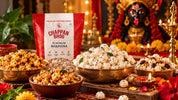
Kali Puja Special: Makhana Snack Ideas for a Festive Evening
, by Akash Jain, 28 min reading time
, by Akash Jain, 28 min reading time
That is where Kali Puja snacks made with makhana, also known as fox nuts or lotus seeds in everyday food conversations, can make a difference.
Kali Puja is a time for devotion, family gatherings, beautiful decorations, and delicious food. As homes come alive with lights and celebrations, snacks become an important part of welcoming guests and enjoying the festive evening together. However, preparing a variety of tasty snacks can be challenging when you want something that feels special without spending hours in the kitchen.
That is where Kali Puja snacks made with makhana, also known as fox nuts or lotus seeds in everyday food conversations, can make a difference. Makhana has a light, crunchy texture and a mild flavour that pairs well with spices, herbs, and simple seasonings. It can be roasted in advance, prepared in different flavours, and served alongside traditional Bengali festive treats.
If you are searching for Kali Puja special snacks that balance flavour, convenience, and variety, makhana is worth considering. From spicy roasted bites to tangy chaat and mildly sweet combinations, there are plenty of ways to make it part of your festive menu.
This guide explores practical recipes, preparation tips, serving ideas, and ways to include makhana snacks for Durga Puja in your wider Bengali festive food traditions. Whether you are hosting a family gathering or enjoying a quiet evening after the puja rituals, these ideas can help you prepare snacks that are simple, appealing, and easy to customise.
Short description: Discover delicious and practical Kali Puja snacks with roasted makhana, Bengali-inspired seasonings, and easy festive recipes. Chappan Bhog Makhana can be considered when exploring makhana options for your festive snack spread.
Festive food does not always need to be complicated. Sometimes, a simple ingredient becomes memorable because of how it is seasoned, presented, and shared.
Makhana works well for festive occasions for several reasons.
Makhana is not a replacement for every traditional festive dish. Instead, it adds variety to a table that might already include luchi, nimki, sweets, chops, and other Bengali favourites.
The goal is to offer a mix of textures and flavours so guests can choose what they enjoy.
Bengali festive food is closely connected with family traditions, seasonal ingredients, community gatherings, and the pleasure of sharing meals. During Kali Puja, food arrangements vary between households. Some families prepare elaborate spreads, while others prefer a few homemade favourites alongside sweets, fruits, and tea.
A modern festive menu can respect these traditions while introducing convenient ingredients such as makhana.
For example, imagine preparing snacks for relatives who arrive at different times during the evening. Deep-fried snacks may lose their crispness if they sit uncovered, and some preparations require last-minute cooking. Dry-roasted makhana can be made in small batches, stored appropriately, and served in fresh portions.
You could offer three varieties:
This approach provides variety without requiring three entirely different recipes.
It is also important to remember that traditional Kali Puja food practices differ by family and region. If you are preparing food for a particular ritual or religious offering, follow the customs of your household or local temple. A snack suitable for general entertaining may not necessarily be appropriate for a specific offering.
Preparation note: Cooking times are approximate and depend on pan size, heat, and the quantity of makhana.
This is one of the simplest festive snacks to prepare when you want something crunchy without complicated ingredients.
Ingredients
Method
Practical tip: Avoid turning the heat too high to save time. Makhana can develop brown patches before the inside becomes crisp. Slow, even roasting produces a better result.
Serve this version with evening tea or alongside other snacks. It is also a useful starting point for experimenting with different seasonings.
If your guests enjoy bold flavours, a spicy version can bring a little excitement to your snack platter.
Ingredients
Method
The combination of cumin, chilli, and tangy amchur gives the snack a savoury profile that works well with Indian festive menus.
Expert tip: Add powdered spices after roasting rather than exposing them to prolonged high heat. This helps prevent the spices from burning and developing a bitter taste.
For a family gathering, keep the base batch mildly spiced and offer extra chilli seasoning on the side.
Tangy snacks are useful when the menu already includes rich sweets or fried foods. Chaat masala adds a familiar combination of savoury, sour, and aromatic notes.
Ingredients
Method
The most important detail is moisture control. Too much lemon juice can soften the makhana, particularly if the snack sits for a long time.
Serving idea: Prepare the dry-seasoned makhana ahead of time, then add lemon juice to individual portions just before serving.
This is an easy way to add flavour without preparing a separate chutney or complicated dip.
Not every festive snack needs traditional seasoning. A peri-peri variation can appeal to teenagers and guests who enjoy modern fusion flavours.
Ingredients
Method
For a creamier flavour, you can serve this snack with a separate yoghurt-based dip. Keep the dip chilled and serve it separately so that the makhana stays crunchy.
This option adds variety to Kali Puja special snacks, especially when serving people with different flavour preferences.
If you want a sweet alternative to packaged confectionery, a lightly sweetened makhana recipe is worth trying.
Ingredients
Method
Jaggery can absorb moisture, and a thick coating may make the snack sticky. For the best texture, use a light dusting and prepare a small batch shortly before serving.
This recipe is best treated as a sweet snack rather than a sugar-free health food. Jaggery still contributes sugar, so portion size matters.
For longer evenings or guests who prefer a mixture of textures, combine roasted makhana with nuts and seeds.
Ingredients
Method
This mixture provides more variety in texture and can contribute protein, fibre, and unsaturated fats from the nuts and seeds. However, its overall nutritional profile depends on the ingredients, added oil, and portion size.
Important: Clearly identify nuts in your serving area and check for allergies before offering this mix to guests.
The success of most roasted makhana recipes depends less on the seasoning and more on the roasting technique.
Makhana can appear crisp on the outside while retaining moisture inside. This is why simply heating it for a few minutes does not always produce a satisfying crunch.
Follow these practical steps.
A heavy-bottomed pan distributes heat more evenly than a thin pan. This reduces the chance of some pieces burning while others remain soft.
Start with low to medium-low heat. Stir regularly so the makhana heats evenly on different sides.
Take one piece out of the pan, allow it to cool briefly, and bite into it. Properly roasted makhana should feel crisp rather than rubbery or chewy.
You can dry-roast makhana before adding a little oil or ghee. This helps control the amount of added fat while allowing seasonings to adhere.
Spread the roasted makhana on a dry plate or tray. Let it cool completely before placing it in an airtight container. Trapping residual heat can create condensation and reduce crispness.
Wet chutneys, lemon juice, yoghurt, and other moisture-rich ingredients are best added at serving time. Dry seasoning generally stores better than wet coatings.
These steps are particularly useful when preparing snacks for a gathering where you want to spend more time with guests and less time in the kitchen.
The idea behind healthy festive snacks is not to eliminate everything traditionally enjoyed during celebrations. Instead, it is to create variety, pay attention to preparation methods, and serve reasonable portions.
Makhana can fit into that approach, but it is important to understand what it does and does not offer nutritionally.
Makhana provides carbohydrates and some protein, with a relatively low fat content before oil, ghee, or other ingredients are added. It also contains minerals, although exact amounts vary by product and processing.
Its suitability depends on the overall recipe. A lightly roasted serving and a heavily coated, buttery serving should not be treated as nutritionally identical.
|
Preparation |
Practical consideration |
|
Dry-roasted makhana |
Uses little or no added fat |
|
Lightly ghee-roasted makhana |
Adds flavour and some fat |
|
Makhana with nuts and seeds |
Adds variety and more nutrients, but increases energy content |
|
Sweetened makhana |
Adds sugar from jaggery or other sweeteners |
|
Makhana with wet chutney |
Adds flavour but can soften the snack |
Instead of serving only one snack, consider combining:
This approach supports choice and variety without labelling any single snack as automatically healthy.
People managing diabetes, food allergies, or other dietary needs should consider the full ingredients and serving size rather than relying on the words natural or roasted as a guarantee of suitability.
One of the practical advantages of flavoured makhana is that a single plain batch can become the foundation for several different snacks.
Rather than preparing every recipe from scratch, roast a larger quantity of plain makhana and divide it into separate bowls. Season each portion differently, and you have a varied platter with minimal extra work.
Here is a sample menu for a Kali Puja evening.
For guests who prefer mild flavours
Salted makhana with a pinch of black pepper. Keep the seasoning simple and avoid unnecessary heat.
For guests who enjoy spicy food
Chilli and cumin makhana with optional extra seasoning on the side.
For guests who enjoy sweet snacks
Lightly sweetened cinnamon makhana, served separately from savoury varieties.
For guests who enjoy fresh, tangy flavours
A small serving of makhana chaat with fresh vegetables, lemon, and dry spices. Assemble just before serving.
The advantage of this approach is flexibility. If one flavour proves particularly popular, you can prepare more of it without changing your entire menu.
Festive evenings can become busy, particularly when family members are visiting, decorations need attention, and several dishes must be prepared. A simple schedule can make snack preparation much easier.
A few hours before guests arrive
Check the makhana for any stale or damp pieces. Measure the spices, prepare the serving bowls, and roast the plain makhana if you have time.
Around 30 minutes before serving
Divide the roasted makhana into portions. Prepare the dry seasonings and mix the varieties that will be served immediately.
Just before guests arrive
Add fresh lemon juice to the tangy batch, arrange the bowls, and prepare any dips separately. Keep wet ingredients away from the dry snacks until serving.
During the evening
Refill the bowls with smaller fresh portions instead of leaving one large serving exposed for hours. This helps preserve crispness and makes it easier to manage food hygiene.
The quantity depends on whether makhana is the main snack or one of several items.
For example, if you are serving six people and want makhana to be one of three or four snack options, you could start with about 3–4 cups of plain makhana and adjust based on appetite. This is a planning estimate, not a standard serving recommendation.
If guests are arriving throughout the evening, it is often better to keep some of the roasted makhana in an airtight container and season it in smaller batches.
These easy evening snack ideas can reduce last-minute work without making the gathering feel less festive.
Even a simple recipe can disappoint if a few practical details are overlooked.
High heat can burn the outer surface before the makhana becomes crisp throughout.
Better approach: Use moderate heat, stir frequently, and test a cooled piece before switching off the stove.
A heavy coating can make makhana greasy and increase the amount of added fat.
Better approach: Begin with a small amount of oil or ghee. Add more only if necessary for flavour or seasoning.
Moisture or poorly distributed seasoning can interfere with texture.
Better approach: Roast thoroughly first, then add dry spices. Introduce wet ingredients immediately before serving.
Warm snacks can release steam, which condenses and makes the contents soft.
Better approach: Allow the makhana to cool completely before storage.
A snack may be roasted but still contain considerable salt, sugar, or added fat.
Better approach: Consider the complete recipe and portion size, not just the cooking method.
A very spicy snack may not suit every guest, while nuts and certain seasonings can create allergy concerns.
Better approach: Label the varieties, keep ingredients separate, and ask about allergies when appropriate.
A few small adjustments can improve both the flavour and presentation of your festive platter.
For a simple branded snack selection, Chappan Bhog Makhana can be considered when choosing makhana for these recipes. Check the product label for ingredients, added flavourings, allergens, and storage directions. The recipe suggestions in this article are adaptable to plain makhana and should not be interpreted as claims about any specific product's nutritional profile.
Food presentation does not need to be expensive to feel special. A little thought can make even simple snacks look appropriate for a festive gathering.
Small bowls make the snack table look organised and allow you to refill each variety as needed.
A combination of plain makhana, red chilli-seasoned makhana, a nut mix, and a sweet variety creates visual interest without complicated decoration.
Place serving bowls where guests can reach them easily, away from crowded cooking areas, open flames, and hot utensils.
Simple labels such as “Mild,” “Spicy,” “Sweet,” and “Contains Nuts” help guests make informed choices.
If your gathering includes a ritual offering, keep those preparations separate from general snacks and follow the relevant household or temple practices.
The best festive table is not necessarily the one with the greatest number of dishes. It is one where food is prepared thoughtfully, served safely, and shared comfortably.
The best Kali Puja snacks are the ones that bring people together without making festive preparations unnecessarily stressful. Makhana offers a practical starting point because it can be roasted, seasoned, and served in several different ways using ingredients commonly found in an Indian kitchen.
From classic salted bites and spicy cumin flavours to sweet cinnamon combinations and tangy chaat, these recipes offer variety for different tastes. With careful roasting, sensible seasoning, and proper storage, you can prepare an appealing snack spread while keeping your time in the kitchen under control.
If you are planning your festive menu, try two or three Kali Puja special snacks first rather than preparing every recipe at once. Experiment with different seasonings, ask your family which flavours they prefer, and adjust the menu for your next gathering. You can also explore Chappan Bhog Makhana when selecting makhana for your festive snack preparations.
A little preparation, a few good ingredients, and thoughtful presentation can make your festive evening more enjoyable. After all, celebrating together is what makes the occasion memorable.
Good options include roasted makhana, nimki, vegetable chops, fruit platters, savoury mixtures, and traditional sweets. The right selection depends on your guests, available preparation time, and household customs.
If you want a quick addition to a larger spread, start with plain roasted makhana and divide it into mild, spicy, and tangy varieties. This creates a choice of flavours without requiring multiple complicated recipes. Keep wet accompaniments separate until serving so the dry snacks retain their texture.
Roast the makhana over moderate heat, stir regularly, and check that a cooled piece is crisp before removing the batch from the pan. Let it cool completely before storing it in an airtight container.
Avoid adding lemon juice, chutney, or other wet ingredients until you are ready to serve. If you expect guests to arrive at different times, keep part of the batch sealed and refill the serving bowls as needed. Humid weather can make dry snacks lose their crunch more quickly, so minimise the time they remain exposed to air.
Makhana can be part of a balanced snack selection. Plain makhana provides carbohydrates and some protein, and it is naturally relatively low in fat before added ingredients.
However, the nutritional profile changes when you add ghee, oil, sugar, jaggery, or other toppings. A nut-based mixture also contains more energy per serving than plain roasted makhana. If you are watching your salt, sugar, or energy intake, pay attention to ingredients and portions rather than assuming every roasted preparation is automatically healthy.
Yes. Most of the recipes in this guide can be adapted for both occasions. Makhana snacks for Durga Puja can include salted, spicy, sweet, or tangy varieties, and the same preparations can be served during Kali Puja family gatherings.
The main consideration is the type of event. Snacks intended for general entertaining may differ from foods prepared for a religious offering. Follow your household's traditions and prepare smaller batches of wet snacks such as chaat shortly before serving.
Cumin, black pepper, turmeric, chilli powder, chaat masala, amchur, and cinnamon can all work well, depending on whether you want a savoury, tangy, spicy, or sweet result.
For beginners, start with salt and black pepper, then experiment with a small batch using cumin and chilli. Add dry seasonings after roasting to reduce the risk of burning them. When using packaged spice blends, check their salt content and ingredients. Taste the cooled snack before adding more seasoning, as this helps you avoid making the final batch excessively salty or spicy.