
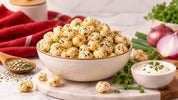
Cream & Onion Makhana: A Deliciously Crunchy Snack for Everyday Cravings
, by Akash Jain, 12 min reading time
, by Akash Jain, 12 min reading time
If you are buying Cream & Onion Makhana, pay attention to both the label and the physical quality of the product.
When the evening hunger hits, it is easy to reach for biscuits, fried snacks, or something loaded with salt and oil. The problem is that these choices often leave you feeling heavy rather than genuinely satisfied. This is where Cream & Onion Makhana makes an interesting addition to your everyday snack routine.
Made from roasted fox nuts and coated with a creamy, savoury onion flavour, this snack combines a light crunch with the familiar taste found in chips and other savoury treats. It works well for office breaks, movie nights, travel, post-lunch cravings, or simply those moments when you want something crunchy between meals.
For people exploring healthy snacking, the appeal of makhana goes beyond its flavour. The preparation method, portion size, seasoning, and ingredients all influence whether a flavoured makhana product fits comfortably into your diet. Understanding these details can help you enjoy a roasted makhana snack without treating it as a guilt-free food you can eat without limits.
Makhana, commonly known as fox nuts or lotus seeds, has been enjoyed in Indian food traditions for generations. The seeds are naturally quite plain, which makes them particularly useful as a base for different flavours.
When properly roasted, makhana develops a noticeably crisp texture. This is why it has become popular as an alternative to some conventional fried snacks.
Plain makhana can be roasted with simple seasonings such as salt, pepper, chilli, or herbs. Modern snack makers have taken this a step further by introducing flavours such as peri-peri, cheese, pudina, and cream and onion.
The important point is that Cream & Onion Makhana is still a flavoured snack. Its nutritional profile depends on more than the makhana itself. Added seasoning, fat, flavouring ingredients, and serving size matter too.
That distinction is useful when making sensible everyday snack choices.
The popularity of Cream & Onion Roasted Makhana comes down to a combination of texture, flavour and convenience.
Makhana provides the crunch, while cream and onion seasoning creates a richer, savoury taste. The result feels more indulgent than plain roasted fox nuts without necessarily requiring deep frying.
There is also a practical advantage: roasted makhana is easy to portion into a small bowl or container. You do not have to prepare an elaborate snack every time hunger strikes.
A few situations where it can work particularly well include:
The experience is especially satisfying when the makhana remains crisp rather than soft or stale. Texture plays a surprisingly large role in how enjoyable a snack feels.
The answer depends on the overall product and how much you eat.
Makhana itself can be a useful component of healthy snacking, particularly when it is roasted rather than prepared with excessive oil. However, adding a creamy savoury seasoning changes the equation slightly.
A sensible approach is to look at the nutrition label rather than judging a snack only by words such as "roasted" or "natural."
Check:
This does not mean you need to avoid flavoured snacks. It simply helps you understand what you are actually eating.
For example, someone may pour an entire large packet into a bowl while watching a film and assume that because the snack is made from makhana, the whole packet is a reasonable serving. In reality, the packet may contain several servings.
Healthy snacking is less about finding one magical food and more about making better choices consistently, including sensible portions.
Roasting is one of the main reasons makhana works so well as a snack.
Deep frying involves submerging food in hot oil, while roasting can produce a crisp texture with considerably less added fat when the preparation is controlled. However, "roasted" does not automatically mean low-calorie or nutritionally superior.
Commercially prepared roasted snacks can contain added oils, flavour coatings, and relatively high sodium levels. The finished product should therefore be evaluated as a whole.
For home preparation, gentle roasting can help bring out makhana's natural crispness. A common practical trick is to roast the fox nuts over low to medium heat and stir them regularly. High heat can brown the outside before the inside becomes properly crisp.
A simple test is to allow one piece to cool for a moment and bite into it. Properly roasted makhana should have a dry, crisp bite rather than a chewy centre.
Portion control is probably the most useful habit when incorporating flavoured snacks into an everyday routine.
Instead of eating directly from the packet, place an appropriate amount into a bowl. This creates a natural stopping point and makes it easier to notice how much you have consumed.
You can also pair a serving with something that adds nutritional variety.
For example:
The objective is not to make every snack complicated. Convenience is one of the reasons people choose packaged snacks in the first place.
The better strategy is to keep the portion sensible and consider what the rest of your daily meals already provide.
Not every packet of flavoured makhana will offer the same eating experience.
If you are buying Cream & Onion Makhana, pay attention to both the label and the physical quality of the product.
Ingredients are generally listed by quantity, so the beginning of the list can tell you what makes up most of the product.
If you are specifically looking for a roasted snack, check whether the preparation and seasoning match your preferences.
Fresh makhana should have a crisp bite. If it tastes soft, rubbery, or noticeably stale, the packaging or storage may not have protected it adequately.
Creamy savoury seasonings can sometimes contribute substantial sodium. If you eat packaged snacks regularly, comparing labels can help you choose products that better fit your overall eating pattern.
A product can be perfectly reasonable in a moderate serving but less suitable if consumed mindlessly in large quantities.
This is particularly relevant for snacks designed to be highly palatable. Creamy and savoury flavours can make it surprisingly easy to keep reaching for another handful.
Makhana has a positive nutritional reputation, but the finished product matters. Added oil, seasoning, and portion size should not be ignored.
This is one of the easiest ways to lose track of quantity. A bowl provides a much clearer visual indication of your serving.
Moisture is the enemy of crunchy makhana. Once opened, reseal the packet properly and keep it in a cool, dry place. If the product repeatedly comes into contact with humid air, its texture can deteriorate quickly.
Makhana can be a convenient snack, but a serving does not necessarily provide everything you would expect from a balanced meal. If you are genuinely hungry, eating a more complete meal may be more satisfying than repeatedly snacking.
If you enjoy a roasted makhana snack, consistency matters more than perfection.
Keep portions ready rather than carrying an open packet around. If you prepare makhana at home, roast enough for a few servings and store it in an airtight container once completely cool.
For packaged Cream & Onion varieties, compare labels between brands instead of choosing based solely on the flavour name or packaging.
It is also worth paying attention to your hunger pattern. If you regularly become extremely hungry around 5 or 6 p.m., the solution may not simply be finding a better snack. Your lunch may be too small, your meal timing may need adjustment, or you may need more protein and fibre earlier in the day.
A snack should support your eating routine, not compensate for an unbalanced one.
There is no single "best" time to eat makhana.
Many people naturally enjoy it in the late afternoon or evening because the crunch makes it satisfying during tea breaks or leisure time. It can also be useful during travel when you want something dry and convenient.
If you are eating it at night, portion size becomes particularly relevant. A large serving of any calorie-containing snack can add substantially to your daily intake, even if the food itself seems relatively light.
The most useful question is therefore not "Is makhana healthy at night?" but "Does this portion fit into my overall eating pattern?"
Cream & Onion Makhana brings together the crisp texture of roasted fox nuts with a familiar creamy onion flavour, making it an easy option when you want something savoury and crunchy.
Its biggest advantage is convenience, but making it part of sensible healthy snacking comes down to the details: choose products carefully, read the label, store them properly, and keep portions realistic.
Whether you enjoy it during a work break, while travelling, or as a crunchy evening snack, Cream & Onion Roasted Makhana can have a place in a balanced eating routine. The goal is not to label every snack as either "healthy" or "unhealthy." It is to understand what you are eating and make choices that work for your lifestyle.
Cream & Onion Makhana can fit into a balanced diet as a snack, particularly when consumed in a sensible portion. However, it should not automatically be considered a health food simply because its base ingredient is makhana. Check the nutrition label for calories, fat, sodium, and other added ingredients. Roasting, seasoning, and portion size all influence the final nutritional profile.
Plain makhana has a relatively mild flavour and can be seasoned at home. Cream & Onion Makhana is roasted and combined with a prepared savoury seasoning designed to provide a richer, creamy onion taste. This makes it more immediately enjoyable for people who prefer strongly flavoured snacks, although the seasoning can also increase sodium, fat, or other nutritional components depending on the recipe.
Yes, roasted makhana can be included regularly if the serving size and overall diet are appropriate. The important consideration is variety. Eating the same snack every day is not necessarily a problem, but your overall diet should still contain a broad range of vegetables, fruits, whole grains, protein sources, and other nutrient-dense foods. For packaged flavoured versions, checking the nutrition label regularly is a sensible habit.
Store makhana in an airtight container or keep the original packet tightly sealed after opening. Protect it from humidity and moisture, particularly in warm or humid environments. If homemade roasted makhana becomes slightly soft, briefly reheating it in a dry pan can sometimes restore some crispness, provided it has been stored safely and has no signs of spoilage.
It depends on the specific products being compared. Makhana can provide a crunchy snack base and may be prepared with less oil than many fried snacks, but flavoured makhana is not automatically nutritionally superior to every alternative. Compare serving sizes, calories, sodium, fat, and ingredient lists. The better choice is the one that fits your nutritional needs, preferences, and eating habits.