
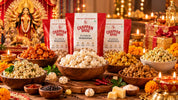
Which Makhana Flavours Are Best for Durga Puja and Diwali Parties?
, by Akash Jain, 21 min reading time
, by Akash Jain, 21 min reading time
Some people enjoy the spicy kick of Peri Peri, while others prefer the refreshing taste of mint or the creamy, savoury notes of onion seasoning.
Festive gatherings are all about good food, lively conversations, and sharing something delicious with family and friends. During Durga Puja and Diwali, snack tables often feature traditional sweets, namkeen, fried treats, and refreshing drinks. But if you want to add something crunchy and easy to serve, flavoured makhana is worth considering.
The best flavoured makhana depends on the occasion, your guests' preferences, and the other foods on your menu. Some people enjoy the spicy kick of Peri Peri, while others prefer the refreshing taste of mint or the creamy, savoury notes of onion seasoning. Choosing the right flavours can make your snack table more interesting without adding much preparation work.
Makhana, commonly called fox nuts, has a mild taste that works well with a variety of seasonings. You can serve it during a family gathering, arrange it in small bowls for a card party, or include it in a festive snack platter alongside traditional Indian treats.
If you are looking for flavoured makhana for Diwali or planning makhana snacks for festive parties, this guide will help you compare popular flavours, understand how to serve them, and choose combinations that suit different guests.
Short description: Explore the best makhana flavours for Durga Puja and Diwali, including spicy, minty, and creamy options. Discover practical serving ideas and festive snack combinations with Chappan Bhog Makhana.
Festive snacks should be enjoyable, convenient to serve, and easy to share. Makhana offers several practical advantages, especially when you are preparing food for a group.
Makhana is not intended to replace traditional festive favourites. Rather, it adds another texture and flavour to a spread that might already include sandesh, rasgulla, laddoos, samosas, or namkeen.
The most useful approach is to select a few complementary flavours instead of buying or preparing every available variety.
Durga Puja and Diwali gatherings can have different food traditions, even when both involve family visits and festive entertaining.
During Durga Puja, you might serve snacks to relatives visiting between pandal outings or offer refreshments during a relaxed evening at home. During Diwali, you may need snacks for guests arriving throughout the evening, a card party, or a larger family celebration.
These situations call for different flavour combinations.
For example, a family gathering with children and older relatives may benefit from mild, familiar flavours. A party with friends may be a good opportunity to introduce stronger seasoning. If you are arranging a larger buffet, offering three distinct options can provide enough variety without overcrowding the table.
The following sections compare popular Makhana Flavours and explain when each one may work best.
The best flavour is not necessarily the strongest or most unusual one. A good party selection balances seasoning, crunch, and variety so guests can find something they enjoy.
The flavour descriptions below refer to typical seasoning profiles. The exact taste, salt level, and ingredient list vary by product and recipe.
Peri Peri Makhana is a strong choice for guests who enjoy a spicy, tangy, and savoury snack. Peri-peri seasoning commonly combines chilli with garlic and other spices, although the exact blend depends on the manufacturer.
Its bold flavour makes it a useful contrast to sweet treats and milder savoury foods.
Why choose it?
Serving tip: Pair peri-peri makhana with a mild salted variety rather than serving several intensely spicy snacks together. This gives guests a choice and prevents the entire platter from feeling too hot.
If you are serving children or guests who avoid chilli, keep this variety in a separate, clearly labelled bowl.
Pudina Makhana brings a minty, herbaceous flavour that contrasts nicely with richer or sweeter foods. Depending on the seasoning blend, it may also have tangy, salty, or mildly spicy notes.
This can be a good option when you want a flavour that feels different from conventional chilli-based snacks.
Why choose it?
Serving tip: Serve pudina makhana alongside plain salted makhana and a sweet snack. The contrast creates a balanced selection without requiring complicated preparation.
If you are making it at home, use dried mint or a dry mint-based spice blend. Fresh mint leaves contain moisture and are better added to a snack immediately before serving, if used at all.
Cream and Onion Makhana is a useful choice for guests who enjoy a creamy, savoury flavour without strong chilli heat. Commercial versions typically use a dry seasoning blend designed to evoke creamy dairy and onion notes.
This familiar flavour profile can work particularly well at mixed-age gatherings.
Why choose it?
Serving tip: Taste the seasoning before adding extra salt if preparing your own version. Packaged blends can already contain salt, sugar, dairy ingredients, or other flavour enhancers.
If any guest has a milk allergy or avoids dairy, check the full ingredient and allergen statement rather than assuming that the product is dairy-free because the makhana itself is plant-based.
Classic salted makhana is easy to overlook when choosing party snacks, but it serves an important purpose. Not everyone wants bold seasoning, and a simple option can balance a table full of strongly flavoured foods.
Why choose it?
To prepare it, roast two cups of makhana in a heavy-bottomed pan over low to medium-low heat for approximately 6–10 minutes, stirring regularly. Add a small amount of ghee or oil if desired, then season lightly with salt and black pepper.
Allow the makhana to cool before testing its crunch. If the centre remains chewy, continue roasting briefly.
Serving tip: Make this the largest batch when you are uncertain about guests' spice preferences. It can also be mixed with other dry ingredients to create a more varied snack bowl.
Chaat masala makhana provides a savoury, tangy flavour that fits naturally into an Indian snack spread. Depending on the blend, it may include dried mango powder, cumin, black salt, and other spices.
Why choose it?
Serving tip: Season the makhana after roasting and add only a small amount of lemon juice immediately before serving, if desired. Too much moisture can quickly soften the pieces.
This is a particularly practical option when you want a tangy snack but need to prepare most of the menu in advance.
A sweet makhana variation can add a different dimension to a party platter, especially when the other options are savoury.
You can make a simple version by roasting plain makhana, then adding a light dusting of cinnamon and powdered jaggery after reducing the heat.
Why choose it?
Serving tip: Keep the coating light and allow the snack to cool before serving. Too much jaggery can make the pieces sticky.
Remember that jaggery is still a source of sugar. This variety is best treated as a sweet snack rather than a sugar-free or automatically healthier alternative to mithai.
Even the best seasoning cannot compensate for makhana that is burnt, chewy, or stale. When preparing Roasted Makhana, focus on even heating and careful storage.
A heavy-bottomed pan distributes heat more evenly than a thin pan. This helps prevent some pieces from browning too quickly while others remain under-roasted.
Roast the makhana over low to medium-low heat, stirring regularly. The exact time varies with the pan, batch size, and moisture level, so use the texture test rather than relying only on a timer.
Dry spice blends are generally easier to distribute once the makhana has become crisp. Adding powdered seasonings too early can expose them to prolonged heat and create a burnt or bitter taste.
A small amount of oil or ghee can help seasoning adhere, but too much can make the snack greasy. You can dry-roast first and add a little fat near the end.
Spread the roasted makhana on a clean, dry tray. Once cool, place it in an airtight container.
Warm makhana sealed in a container can release steam, leading to condensation and a loss of crispness. Keep wet dips and fresh accompaniments separate until serving.
These steps are useful whether you are preparing homemade snacks or checking how to serve packaged flavoured varieties.
Choosing flavoured makhana for Diwali becomes easier when you consider who will be eating it and what else you plan to serve.
Instead of choosing flavours based only on popularity, use the occasion and the overall menu as your guide.
For a lively evening party
Choose Peri Peri Makhana if your guests enjoy bold, spicy flavours. Pair it with a mild variety to give everyone an alternative.
For a family gathering
Pudina Makhana offers a herbal flavour that can appeal to guests who want something different from chilli-heavy snacks.
For a mixed-age group
Cream and Onion Makhana is worth considering for guests who prefer familiar savoury flavours. Check the label for dairy and other allergens.
For a traditional snack spread
Classic salted makhana balances strongly seasoned snacks and pairs easily with tea, sweets, and other refreshments.
Before buying or preparing makhana for your celebration, ask yourself:
These questions can help you choose a useful combination rather than purchasing flavours that overlap too much.
Makhana can be part of a varied snack menu, but its nutritional value depends on how it is prepared and how much you eat.
Plain makhana provides carbohydrates and some protein and is relatively low in fat before oil or other ingredients are added. However, flavoured varieties can contain additional salt, sugar, oil, dairy-derived ingredients, or flavour enhancers.
That means two products made with the same base ingredient can have different nutritional profiles.
|
Variety |
What to check |
|
Plain roasted makhana |
Added oil and salt |
|
Peri Peri Makhana |
Chilli intensity, sodium, and seasoning ingredients |
|
Pudina Makhana |
Salt content and the ingredients in the mint blend |
|
Cream and Onion Makhana |
Dairy ingredients, allergens, salt, and added fat |
|
Sweet makhana |
Sugar or jaggery content |
|
Makhana and nut mix |
Nut allergies, portion size, and added oil |
Rather than relying entirely on packaged snacks, consider combining:
This approach gives guests a variety of options without labelling one snack as a complete health solution.
Practical advice: If you are comparing packaged products, read the nutrition panel and ingredient list. Words such as roasted, natural, or light do not by themselves establish that a snack is low in salt, sugar, or calories.
A well-planned festive snack platter does not need to contain ten different foods. Three complementary makhana flavours, presented neatly, can provide enough choice for a small gathering.
For a group of six to eight people, you could begin with three bowls:
Add fruit, traditional namkeen, or a small plate of sweets if your menu needs more variety.
For Durga Puja get-togethers: Choose a mix of mild and spicy flavours that can be served alongside tea, sweets, and other refreshments after a day of celebrations.
For Diwali card parties: Select dry, easy-to-portion snacks that guests can pick up conveniently. Keep bowls away from drinks and wet dips to protect the texture.
For office or community gatherings: Label the flavours clearly and identify common allergens. Individual serving bowls or small portions can also make distribution easier.
If makhana is one of several snacks, start with a modest amount per guest and refill as needed. The exact quantity depends on the number of dishes, the length of the event, and your guests' appetites.
Smaller batches are often more practical than filling a large bowl at the beginning of the evening. They help you maintain freshness and reduce unnecessary waste.
A table containing only chilli-heavy snacks may not suit every guest.
Better approach: Include at least one mild flavour and one more strongly seasoned option.
Different seasoning blends can contain different amounts of salt, oil, sugar, and other ingredients.
Better approach: Compare the ingredient lists and nutrition panels, especially if you are buying packaged snacks.
Cream and onion seasoning may contain milk-derived ingredients, while mixed snack products can contain or encounter nuts and other allergens.
Better approach: Check the product label and communicate ingredient information clearly. Do not assume a product is allergen-free without reliable information.
Lemon juice, chutney, and yoghurt can soften roasted makhana.
Better approach: Serve wet accompaniments separately and add them only when needed.
A flavour that sounds appealing may be too salty, spicy, or strong for your guests.
Better approach: If possible, try a small pack before choosing larger quantities for a party.
Humidity and repeated handling can affect crispness and freshness.
Better approach: Keep spare portions in sealed containers and refill the serving bowls when necessary.
A few straightforward practices can improve the experience for both the host and the guests.
For a branded option, Chappan Bhog Makhana can be considered when exploring makhana for festive gatherings. Choose a variety based on its actual flavour, ingredients, and suitability for your guests. Specific product characteristics should be confirmed from the packaging rather than assumed from the brand name.
These small decisions help make a festive snack table more useful and enjoyable without turning food preparation into a complicated project.
The best-flavoured makhana for Durga Puja and Diwali parties is the variety that suits your guests, complements your menu, and is convenient to serve.
Peri Peri Makhana adds a bold, spicy kick. Pudina Makhana brings herbal freshness, while Cream and Onion Makhana provides a familiar savoury option. Classic salted and tangy chaat masala varieties can round out the selection.
If you are planning your next celebration, start with two or three flavours and serve them in separate bowls. Check ingredient labels, consider dietary preferences, and keep the snacks dry until serving. These simple steps can help you create a varied platter without unnecessary preparation.
Explore Chappan Bhog Makhana when considering options for your festive snack selection, and choose varieties that match your taste and serving needs.
Ultimately, the best-flavoured makhana for festive celebrations is about more than seasoning. It is about offering convenient, enjoyable choices that let everyone spend less time preparing food and more time celebrating together.
There is no single best flavour for every gathering. Peri Peri Makhana suits guests who enjoy spicy snacks, Pudina Makhana offers a herbal alternative, and Cream and Onion Makhana may appeal to people who prefer a mild, savoury taste.
For a mixed group, offer two or three complementary varieties rather than choosing only one. A simple salted option is particularly useful when you do not know everyone's preferences. Consider the other foods on your menu and check ingredients for known allergens before serving.
Peri Peri Makhana is generally intended to provide a more pronounced chilli-based flavour, while Pudina Makhana typically focuses on mint and herbal notes. However, the actual heat level depends on the seasoning blend and manufacturer.
If you are serving guests with different spice preferences, taste the product before buying it in bulk. You can offer a mild variety alongside the peri-peri option so guests can choose according to their preferences.
Flavoured makhana can add variety to a festive menu, and plain roasted makhana can contain less added fat than some deep-fried snacks. However, the comparison depends on the recipe and portion size.
Packaged flavours may contain added salt, oil, sugar, dairy ingredients, or other seasonings. Check the nutrition panel rather than assuming all flavoured varieties are equally nutritious. A balanced festive menu can include makhana alongside fruit, traditional sweets, and other foods.
For a small gathering, two or three flavours are usually a practical starting point. Choose a mild option, a spicy option, and a third variety with a different flavour profile, such as mint or tangy chaat masala.
This creates variety without making preparation or shopping unnecessarily complicated. If you are hosting a larger event, you can add further options based on guest preferences. Keep flavours in separate, labelled bowls and refill them as needed.
Store roasted makhana in an airtight container only after it has cooled completely. Keep the container in a dry place and follow any storage instructions on the product packaging.
Avoid adding lemon juice, chutney, or yoghurt until serving, as moisture can soften the snack. For a longer event, keep reserve portions sealed and refill the serving bowls in smaller quantities. If packaged makhana smells stale or has an unusual texture, do not serve it.